


Solving Your Pet’s Hair Loss: Parasites, Allergies, Hormones, And More
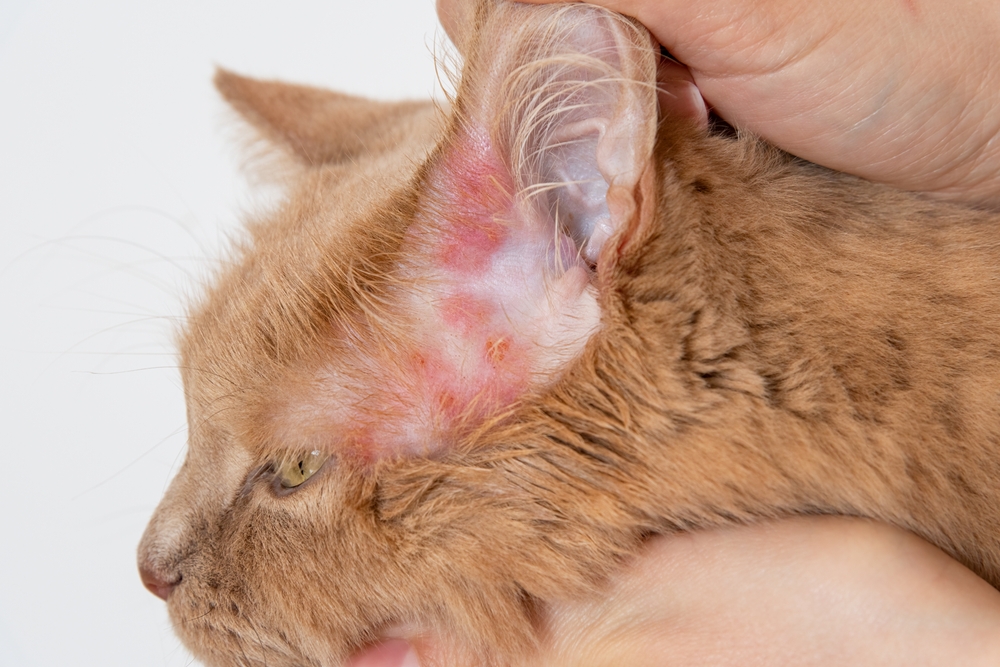
You’re petting your cat one evening and notice a smooth, bare patch on her belly that definitely wasn’t there before. Your dog comes inside from a walk and you realize the thinning along his sides has gotten worse since last month. Maybe you’re vacuuming more… and more… and more. Hair loss in pets (alopecia) catches you off guard because the cause isn’t always obvious, and the symptoms of hormonal problems and skin conditions can look nearly identical. Is it an underactive thyroid? Allergies? Mites? Or just normal shedding? The answer changes everything about how your pet should be treated.
As an AAHA-accredited, Fear Free, and Cat Friendly practice, Animal Medical Center of Marquette takes a thorough, low-stress approach to diagnosing hair loss. We use careful examination and diagnostic testing to tell endocrine causes apart from skin-related ones, and we have the tools to treat both effectively. Request an appointment or call us if your pet’s coat has you concerned.
Normal Shedding vs. Alopecia: What Is the Difference?
Alopecia is the medical term for abnormal hair loss, and it is a symptom, not a disease itself. That distinction matters because whatever is driving the hair loss determines how it needs to be treated.
Normal shedding is diffuse, seasonal, and the coat still looks full underneath. The skin is healthy, and there is no focusing or scratching. Alopecia is different.
Signs that hair loss warrants evaluation:
- Actual bald patches or areas of obvious thinning rather than overall shedding
- Hair loss that started in one location and is spreading
- Redness, scaling, crusting, or thickened skin underneath the bald area
- Hair that grew back with a different texture, color, or failed to regrow at all
- Focused scratching, licking, or chewing concentrated on specific areas
- Coat changes accompanied by other symptoms like weight changes, lethargy, or increased thirst
Any of these warrants a look. Our team will tell you whether what you are seeing is something to monitor or something to investigate.
Allergies: The Most Common Driver of Itch-Related Hair Loss
Allergies are among the most frequent causes of hair loss in dogs and cats, and they tend to be frustrating precisely because they cycle: flare, improve, flare again. Triggers range from food, fleas, to the environment, or sometimes all three.
- Atopic dermatitis occurs when the immune system overreacts to environmental triggers, including the pollen, mold spores, and dust mites common in Michigan’s seasonal climate. The resulting inflammation causes intense itching, and the scratching, licking, and chewing that follow are what damage hair and create bald spots. The skin may not look dramatic at first, which is why owners often underestimate how much discomfort is happening.
- Flea allergy causes intense itching along the lower back and tail base, and visible fleas may be completely absent because your pet is grooming them away aggressively. Pets with flea allergies often have bald spots from their intense scratching and over-grooming.
- Food allergies can happen at any time, even to a food your pet has been eating their whole life. The majority of the time, the protein in the diet is the allergic trigger, like chicken, beef, or pork. Food trials are needed to determine the trigger and find a diet that won’t cause a reaction.
Allergy treatment is often a multi-layered approach of anti-itch medications, skin-soothing topical therapies, secondary infection management, and year-round parasite prevention.
Parasites and Skin Infections That Cause Hair Loss
Even indoor pets can pick up parasites, and some of the most problematic ones are invisible without a microscope. For pets with known parasite exposure or outdoor activity, year-round parasite prevention is the best baseline protection.
Common parasitic causes:
- Demodex mites: patchy hair loss on the face and paws, most common in puppies or pets with compromised immune systems; not contagious between pets
- Sarcoptic mange: intensely itchy, contagious to other pets and to people, causing crusting and hair loss on the ears, elbows, and belly
- Fleas: even if not causing a true “flea allergy”, flea infestations cause significant itching and skin damage
Bacterial and fungal infections:
- Ringworm: a fungal infection (not an actual worm) that causes circular bald patches with scaling; transmissible to humans
- Skin infections: constant itching and licking damages the skin barrier, allowing the normal yeast and bacteria that lives on the skin in small numbers to multiply, then causing even more itching and inflammation
Our services include skin scrapings, cytology, and fungal cultures to identify which organism is causing the problem and guide targeted treatment.
Hormonal Causes of Hair Loss in Pets
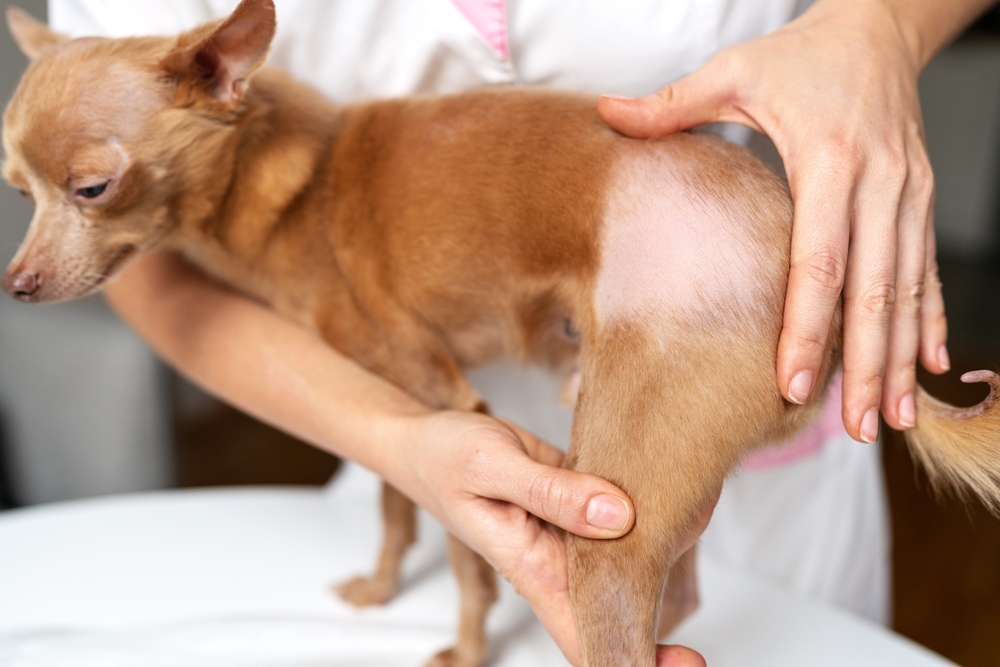
When hair thins symmetrically along both sides of the body, the tail base, or the neck without much scratching, hormones are often involved. These changes can be gradual enough to go unnoticed until they are quite significant.
Thyroid and Adrenal Conditions
Hypothyroidism is among the most common endocrine conditions in middle-aged dogs. Insufficient thyroid hormone slows metabolism throughout the body, affecting coat quality alongside energy, weight, and temperature regulation. The typical presentation includes a dull, thinning coat on the trunk and tail, weight gain without increased food intake, low energy, and sensitivity to cold. These signs develop slowly, which is part of why the condition is often recognized late.
Cushing’s disease (hyperadrenocorticism) looks quite different: excess cortisol production causes a pot-bellied appearance, increased thirst and urination, panting at rest, thin and fragile skin, and symmetrical hair loss along the sides of the body. It tends to affect middle-aged to older dogs.
Both conditions are confirmed through blood testing and managed medically once identified.
Sex Hormones and Intact Pets
In intact male dogs, testicular tumors can produce excess estrogen, leading to symmetrical hair loss, skin pigment changes, and sometimes behavioral shifts. Intact females can develop similar hormonal hair loss from ovarian cysts or cycles. Spaying or neutering often resolves these cases once the hormonal source is removed.
Human topical hormone replacement creams can also cause hair loss in pets. If you or someone in your family uses these medications, be sure your pet cannot lick or contact the application area and that hands are always washed afterward. These creams can be absorbed into your pet’s skin and cause hormonal disruptions resulting in alopecia.
Why Routine Blood Work Matters for Coat Health
Hormone imbalances often appear on blood work before they produce obvious coat changes. Routine blood work during wellness visits establishes baseline thyroid, adrenal, and organ values that make it possible to catch shifts early rather than waiting for visible symptoms to develop. Our services include in-house endocrine screening that delivers results quickly.
Breed-Related Hair Loss Conditions
Some dogs inherit coat conditions that cannot be cured but can be managed comfortably. Knowing breed tendencies sets realistic expectations for what improvement looks like.
- Color dilution alopecia: occurs in dogs with diluted coat colors (blue Dobermans, Weimaraners, Italian Greyhounds); causes hair breakage and thinning in diluted areas
- Flank alopecia: seasonal, recurring bald patches on the sides of the body; common in Boxers, Bulldogs, and Airedales; typically self-limited
- Sebaceous adenitis: destroys the oil-producing glands in the skin, leading to scaling, brittle hair, and hair loss; Standard Poodles have a genetic predisposition
- Zinc-responsive dermatosis: crusting and hair loss around the face and pressure points; seen in northern breeds like Huskies and Malamutes; responds well to zinc supplementation
How Do Stress and Pain Drive Hair Loss?
Cats, particularly, can express emotional distress or physical discomfort through repetitive grooming that creates smooth, thin patches. The distinctive sign of psychogenic alopecia is that the skin underneath usually looks completely normal, no redness, no scales, because the hair is being removed rather than falling out from skin disease. Feline life stressors including household changes, new pets or people, construction noise, or routine disruption can all trigger overgrooming.
In dogs, a lick granuloma is a thickened, raised hairless lesion on a limb created by obsessive licking, often driven by underlying anxiety, boredom, or pain. It creates a self-reinforcing cycle that requires addressing both the physical lesion and the underlying stress driver.
Pain from many conditions will drive a pet to lick the area that hurts. Osteoarthritis can cause licking over joints; feline idiopathic cystitis causes bladder pain that may drive overgrooming in the lower abdomen. If your pet is obsessively grooming a specific area, investigating pain as a driver is an important step.
How Nutrition Affects the Coat
The skin and coat are among the first places to show nutritional shortfalls because hair growth requires a continuous supply of protein, essential fatty acids, zinc, and biotin. A pet eating a diet insufficient in these nutrients, even a high-quality one that does not match that pet’s individual needs, may show it in the coat before any other symptoms appear.
Omega-3 supplementation through food or skin and coat supplements reduces underlying inflammation; Dermoscent Essential 6 Spot-On provides essential fatty acid support for the skin barrier through topical application. Dog skin and coat diets and cat skin and coat diets also provide nutritional support for skin health.
Our services include nutritional guidance to assess whether diet adjustments should be part of a coat health plan.
How Grooming Affects Hair and Skin
Regular grooming improves coat condition by removing debris, distributing natural oils, and improving circulation to the skin. Brushing regularly also lets you notice changes earlier, before a small patch becomes a larger area.
Overbathing or using harsh shampoos strips natural oils and leaves skin dry and fragile. Bathing frequency and product selection should be matched to your pet’s skin type and health status rather than a fixed schedule.
There are a number of veterinary shampoos, conditioners, sprays, and mousses that help to soothe itchy, inflamed, damaged skin. Epi-Soothe Shampoo, DermAllay Oatmeal Shampoo, and DermAllay Oatmeal Spray Conditioner are gentle options for bathing allergic pets, soothing inflammation without stripping the skin. DOUXO S3 CALM Shampoo and DOUXO S3 CALM Mousse are more specifically formulated for reactive skin and help maintain healthy barrier function between baths. Ask us what we’d recommend for your pet.
What the Diagnostic Process Looks Like
A hair loss workup at Animal Medical Center of Marquette starts with history and progresses through targeted testing based on what the pattern and exam findings suggest.
- Detailed history: when it started, whether your pet is itchy, any recent household changes, diet changes, or known exposures
- Physical exam and pattern mapping: the distribution of hair loss (symmetric vs. patchy, facial vs. truncal), skin texture, and presence of secondary changes like redness, scaling, or infection
- In-house testing: skin scrapings for mites, cytology for bacterial or yeast overgrowth, and hair shaft examination
- Fungal culture: when ringworm is suspected (results take 7 to 14 days for accuracy)
- Blood work and endocrine panels: when symmetrical hair loss without much itching points toward a hormonal cause
- Allergy evaluation: elimination diets or environmental management for suspected allergic disease
Our in-house diagnostics provide rapid results, meaning we can often begin treatment at the same visit rather than waiting days for answers.
How Hair Loss Is Treated
Because many different conditions cause hair loss, treatment is always matched to the confirmed diagnosis.
| Cause | Treatment Approach |
| Allergies | Anti-itch medications, diet trials, medicated topicals, omega-3 support, immunotherapy |
| Parasites | Prescription preventives, targeted treatments, environmental cleaning |
| Bacterial/yeast infections | Antibiotics or antifungal therapy guided by cytology and culture |
| Hypothyroidism | Daily thyroid supplementation, regular blood monitoring |
| Cushing’s disease | Medical or surgical management, ongoing adrenal monitoring |
| Stress-related overgrooming | Enrichment, behavior modification, addressing underlying pain or anxiety |
| Breed-related conditions | Supportive care, nutritional support, managing secondary complications |
Frequently Asked Questions About Pet Hair Loss
How quickly will my pet’s hair grow back?
It depends on the cause. Parasite-related hair loss often improves within four to six weeks of treatment. Hormonal conditions can take three to six months for visible coat regrowth once medicated. Some genetic coat conditions may not fully regrow but improve meaningfully with supportive care.
Can my pet’s hair loss spread to me or my family?
Most causes are not contagious. Ringworm and sarcoptic mange are exceptions, as both can transmit to people. Prompt veterinary care and thorough handwashing after handling an affected pet protect the household.
When should I worry rather than watch?
Schedule an evaluation if there are actual bald patches, skin changes under the hair loss, spreading or worsening hair loss, scratching or licking focused on one area, or accompanying symptoms like weight changes, increased thirst, or lethargy. Normal seasonal shedding does not need evaluation; alopecia does.
Can food cause hair loss?
Yes. Food allergies typically affect the face, ears, paws, and rear end, and they are non-seasonal. Diagnosing requires an 8 to 12 week strict elimination diet trial with a novel or hydrolyzed protein, not simply switching brands.
Is there anything I can do at home between appointments?
Consistent use of skin-supportive topicals, dietary omega-3 supplementation, keeping parasite prevention current, and monitoring the pattern for any changes are all practical between-visit steps. Bringing photos of how the coat looks today and how it looked a few weeks ago helps our team track progress more accurately.
Getting to the Root of the Problem
Most cases of hair loss improve significantly once the cause is found and treatment is matched to it. Whether the problem turns out to be allergies, a thyroid imbalance, a skin infection, or stress-related grooming, there is a clear path forward. Our team at Animal Medical Center of Marquette approaches every case with the thorough evaluation it deserves, because getting to the right answer is what gets your pet comfortable again.
Request an appointment or reach out if you have noticed changes in your pet’s coat. We are here to help figure it out.




Leave A Comment