


Autoimmune Blood Conditions in Pets: How We Diagnose and Manage These Serious Diseases
In the Upper Peninsula, ticks are among the least welcome locals, and they bring more than just a reason to do a thorough post-hike check. Tick-borne diseases like anaplasmosis and ehrlichiosis can affect blood cell counts in ways that look remarkably similar to immune-mediated blood diseases, and in some cases they can actually trigger immune reactions. Getting the diagnosis right matters enormously, because treating one condition when the actual culprit is another is a reliable path to a pet who keeps getting sicker and an owner who keeps wondering why.
The Animal Medical Center of Marquette is an AAHA-accredited, Fear Free Certified, and Cat-Friendly Certified practice- all of which means that we care about providing the best medicine, in the most compassionate way possible for your pet. We understand the specific health risks the UP landscape brings, from tick-borne disease to immune-mediated complications. Our full range of diagnostic and veterinary services includes the bloodwork and testing needed to sort out what’s actually going on, and our team is committed to making sure owners understand every step of the process. Reach out to schedule an evaluation.
When Your Pet’s Own Immune System Becomes the Problem
There are few things more alarming than watching a pet who was fine yesterday become weak and pale seemingly overnight. It’s the kind of thing that sends you frantically Googling symptoms at midnight or asking ChatGPT for answers, and whatever you find probably made you more worried, not less.
Autoimmune blood disorders and tick-borne blood diseases can both produce sudden, serious illness in dogs and cats. In both cases, blood cells are affected, whether through direct damage from infection or through the immune system misfiring and attacking the body’s own healthy cells. Understanding how these conditions develop, what symptoms to watch for, and how they’re diagnosed and treated helps you recognize the warning signs early and move quickly when it matters most.
Our emergency care services are available during business hours for pets who need immediate evaluation. If something seems seriously wrong, call us right away. After hours, we offer 24/7 virtual assistance through VetTriage, and they’ll let you know if you need to go to an overnight ER or if you can wait until you see us the next day.
How Does the Immune System Attack Healthy Blood Cells?
The immune system’s job is to distinguish between what belongs in the body and what doesn’t, then eliminate the threats. When it works correctly, it’s an impressive defense network. When it misfires, it can turn on the very cells it’s supposed to protect.
When anemia develops through an immune-mediated process, the body is destroying its own red blood cells faster than it can make new ones. Those red blood cells carry oxygen to every tissue in the body, so when counts drop, pets feel it throughout: weakness, labored breathing, pale gums, exhaustion. When the immune system targets platelets instead, the blood loses its ability to clot properly, and bruising or bleeding occurs with little or no provocation.
The involvement of immune complexes in triggering these reactions is well established, and in cats, cytotoxic antibodies are the mechanism behind similar immune-mediated blood cell destruction, though cats develop these conditions less frequently than dogs.
Autoimmune blood diseases are classified as either primary or secondary. Primary means no underlying trigger has been identified and the immune attack appears to be happening spontaneously. Secondary means something else, such as a tick-borne infection, certain medications, or underlying cancer, set the immune system off. That distinction matters for treatment, because resolving an underlying trigger can sometimes resolve the immune attack along with it.
Certain breeds carry higher genetic risk, including Cocker Spaniels, English Springer Spaniels, Miniature Schnauzers, and Poodles. If you have one of these breeds, it’s worth knowing the warning signs.
Immune-Mediated Hemolytic Anemia: When Red Blood Cells Are the Target
What Happens When the Body Destroys Its Own Red Blood Cells
Immune-mediated hemolytic anemia, or IMHA, occurs when antibodies tag red blood cells for destruction, and the body obliges at a rate that outpaces production. The result is a progressive oxygen delivery problem that can escalate from subtle to critical in a matter of days.
Signs to watch for include:
- Unusual tiredness or reluctance to go on walks or climb stairs
- Faster breathing, even at rest
- Pale or jaundiced gums, including white or yellow-tinged discoloration
- Dark or discolored urine
- Decreased appetite
- Weakness or unsteadiness
Breed predisposition in Cocker Spaniels is well documented, and owners of these dogs benefit from knowing IMHA as a possibility when any of these signs appear. Many pets respond well to early, aggressive treatment, which is exactly why acting quickly matters.
The Clotting Paradox: A Complication of IMHA
Here’s the part of IMHA that catches many owners off guard. Even while the immune system is destroying red blood cells, the body can simultaneously struggle to break down clots normally, creating a genuine risk for dangerous blood clots forming in the lungs, abdomen, or limbs. Blood clotting complications in IMHA are a recognized and serious concern that we monitor carefully throughout treatment.
Signs that may indicate a clot has formed include sudden difficulty breathing, pain or swelling in a limb, or collapse. Anti-clotting medications are used in high-risk cases to reduce this risk, and monitoring continues throughout the treatment course. This is another reason why IMHA warrants prompt veterinary evaluation rather than a wait-and-see approach.
Our emergency care capabilities means that we are equipped to evaluate and begin stabilizing anemic pets quickly during business hours.
Immune-Mediated Thrombocytopenia: When Platelets Are the Target
Immune-mediated thrombocytopenia, or IMT, is the condition where the immune system destroys platelets, the tiny cell fragments responsible for clotting. Without adequate platelets, even minor bumps can result in bruising, and bleeding can be difficult to stop.
Common signs include:
- Bruising that appears without a clear injury, especially on the belly or inner legs
- Tiny red or purple pinpoint dots (called petechiae) on the gums or skin
- Nosebleeds
- Blood in the urine or stool
- Prolonged bleeding from minor cuts
Gentle handling during the diagnostic and early treatment period is important, since unnecessary jostling can worsen bleeding in severely affected pets. With early treatment using immunosuppressive medications, many pets with IMT recover fully and go on to live normal lives.
When IMHA and IMT Occur Together
Some pets face immune attacks on both red blood cells and platelets at the same time, called Evan’s Syndrome, showing signs of anemia and impaired clotting simultaneously. These concurrent immune-mediated conditions are more complex to manage because treatment has to address both problems together, and medication adjustments are based on how each is responding.
These cases require closer monitoring and clear communication between the veterinary team and the pet’s family throughout the process. Our team is committed to keeping owners informed and supported from initial stabilization through long-term management.
Tick-Borne Disease: The Connection to Blood Disorders
This is where living in the Upper Peninsula becomes medically relevant in a way that goes beyond inconvenience. Ticks in Michigan transmit several diseases that affect blood cells, and they do so in ways that can either directly cause blood cell damage or trigger immune-mediated destruction of red blood cells and platelets.
The key tick-borne diseases relevant to blood health:
Lyme disease is transmitted by the black-legged tick, which is well established in the UP. While Lyme disease primarily causes joint and kidney disease, it can also trigger immune reactions that affect blood.
Anaplasmosis is caused by Anaplasma phagocytophilum, which directly infects white blood cells and can cause low platelet counts, making it particularly relevant in a blood disorder workup.
Rocky Mountain spotted fever is caused by Rickettsia rickettsii and can affect blood vessels and platelet counts, producing symptoms that overlap significantly with immune-mediated disease.
Ehrlichia and Anaplasma both target white blood cells and platelets directly, and ehrlichiosis can cause platelet destruction that is clinically indistinguishable from primary IMT without proper testing.
IMHA secondary to Babesia is a well-documented presentation, since Babesia parasites invade red blood cells directly and can simultaneously trigger an immune-mediated attack on them, making identifying and treating the underlying infection a critical part of treatment.
Because tick-borne diseases can both mimic and trigger autoimmune blood conditions, comprehensive tick disease testing is a standard part of any blood disorder workup we do.
How Are These Conditions Diagnosed?
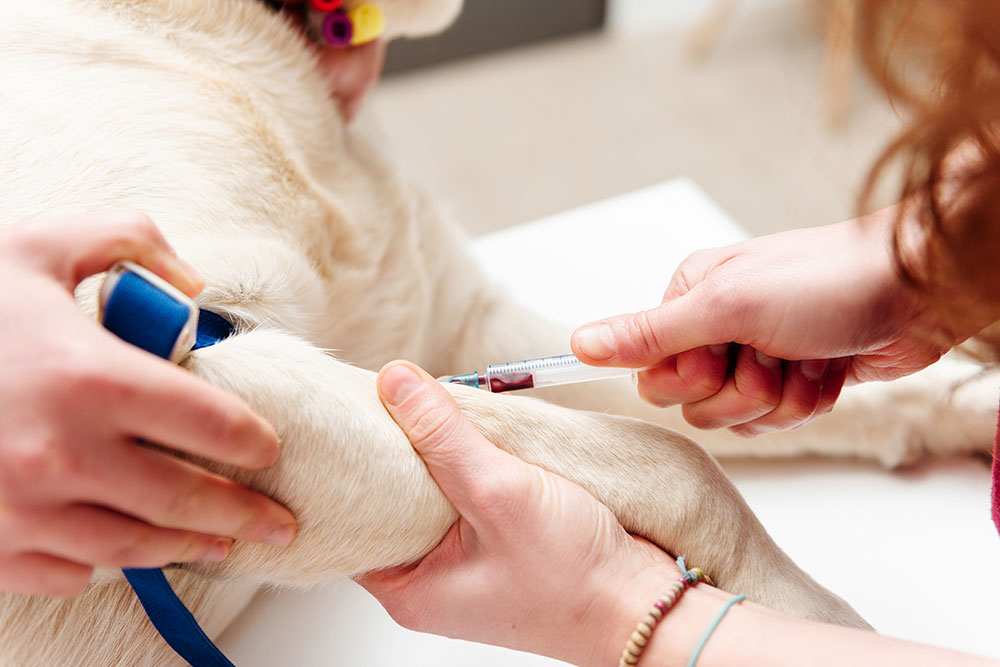
Diagnosis starts with a thorough physical examination and detailed conversation about what you’ve observed at home: when symptoms started, how quickly they progressed, any recent tick exposure, medications the pet is on, and whether appetite or energy have changed.
The core diagnostic tools include:
- Complete blood count (CBC) and blood smear: Shows total red blood cell and platelet counts, and examining cells under a microscope can reveal signs of immune destruction
- Coombs test: Detects antibodies attached to red blood cells, confirming immune-mediated red cell destruction
- Reticulocyte count: Measures whether the bone marrow is responding to the anemia by producing new cells
- Chemistry panel: Evaluates organ function, which matters both for treatment planning and for identifying secondary causes
- Tick-borne disease panel: Tests for Lyme disease, Ehrlichia, Anaplasma, and other tick-transmitted infections that may be triggering the blood problem
Our in-house laboratory allows many of these results to come back the same day, which is critical when a pet needs treatment decisions made quickly. Our full diagnostic services support a thorough workup without unnecessary delays.
How Are Autoimmune Blood Diseases Treated?
The treatment goals are to stop the immune attack and support the pet while blood counts recover. Many pets start with in-hospital care and then transition home with close follow-up monitoring.
Standard treatment components include:
- Corticosteroids as the first-line immune suppressant, typically prednisolone or dexamethasone, to slow or stop the immune attack on blood cells
- Additional immunosuppressive medications when the steroid response is slow or side effects become limiting
- Supportive care: IV fluids, oxygen supplementation if breathing is labored, stomach protectants to manage steroid-related GI irritation, and careful monitoring of vital signs and blood counts
- Anti-clotting medications for IMHA patients at high risk of thrombosis
- Antimicrobial therapy when a tick-borne infection is identified as a trigger, targeted to the specific organism involved
For pets with severe anemia, blood transfusions may be needed to stabilize the pet while immunosuppressive medications take effect. Transfusions don’t treat the underlying condition, but they buy time for treatment to work.
Immune-mediated disease treatment is never one-size-fits-all. Plans are tailored to each pet’s specific blood counts, clinical presentation, and response to initial therapy, with adjustments made as lab results come in.
Protecting Your Pet: Tick Prevention and Blood Health
The best outcome for tick-borne illness is the one that never happens. Tick prevention with year-round preventive medications is the most effective way to reduce your pet’s exposure to tick-borne diseases that can trigger secondary blood disorders.
This matters especially in the UP, where tick season extends further into fall than many people expect, and where black-legged ticks capable of transmitting Lyme disease and anaplasmosis are increasingly common. Checking pets for ticks after time in wooded areas or tall grass, and removing them promptly and correctly, adds another layer of protection.
We carry flea and tick prevention for dogs and for cats and are happy to help you choose the right product for your pet’s lifestyle and size.
Warning Signs That Need Immediate Attention
Trust your instincts. If something seems seriously wrong, it probably is. Seek care immediately if you notice any of the following:
- Sudden weakness, unsteadiness, or collapse
- Pale, white, or yellowish gums
- Unexplained bruising or bleeding
- Rapid or labored breathing at rest
- Loss of appetite lasting more than 24 hours alongside other symptoms
- Dark, discolored, or red-tinged urine
- Limb pain or swelling that appeared suddenly
- Lethargy so profound the pet seems barely responsive
Early intervention meaningfully improves outcomes for both immune-mediated blood diseases and tick-borne illnesses. Contact us or call immediately if you’re seeing any of these signs.
What Does Recovery Look Like?
Many pets with immune-mediated blood disease reach remission, with blood counts returning to normal and remaining stable over time. Progress typically begins within the first week of treatment, though full stabilization takes longer, and the road is not always perfectly linear.
Positive signs that recovery is moving in the right direction:
- Improved appetite and interest in food
- Returning energy and willingness to move around
- Gums returning to healthy pink
- Easier, slower breathing
- Resolution of bruising or bleeding episodes
Relapses can occur, particularly if medications are reduced too quickly or if an underlying trigger was not fully addressed. Early recognition of relapse allows rapid treatment adjustment, which is why ongoing monitoring matters even after a pet seems back to normal. Some pets are eventually able to taper off medications entirely; others need long-term therapy at a low maintenance dose. Regular monitoring bloodwork tells us which category a pet falls into and catches changes before they become crises.

FAQs About Autoimmune Blood Disorders and Tick-Borne Disease
What is the difference between anemia and thrombocytopenia?
Anemia is a deficiency of red blood cells, which affects the body’s ability to deliver oxygen to tissues, causing tiredness, pale gums, and labored breathing. Thrombocytopenia is a low platelet count, which impairs blood clotting and leads to easy bruising and bleeding. Some pets develop both conditions at the same time.
Are autoimmune blood disorders curable?
Many pets reach full remission and live completely normal lives after treatment. Some need long-term maintenance medication to stay stable. Relapses are possible, particularly early in the course of the disease, but early recognition and rapid treatment adjustment make a significant difference in outcomes.
How quickly should I act if I notice warning signs?
Immediately. Pale gums, unusual bruising, weakness, or rapid breathing are not wait-and-see symptoms. Same-day evaluation meaningfully improves safety and recovery outcomes. Call us as soon as these signs appear.
You Don’t Have to Navigate This Alone
Autoimmune blood disorders and tick-borne illnesses can be frightening, especially when symptoms seem to appear out of nowhere in a pet who seemed perfectly healthy. The combination of serious symptoms and diagnostic complexity is a lot to process. We understand that, and we’re here to walk through every part of it with you.
At the Animal Medical Center of Marquette, we bring together advanced diagnostics, evidence-based treatment, and the kind of hands-on, communicative care that keeps families informed and supported throughout the process. If you’re concerned about your pet’s health or want to discuss tick prevention options, request an appointment or contact us directly. With prompt evaluation, accurate diagnosis, and the right treatment plan, most pets do recover and return to their normal lives.




Leave A Comment