


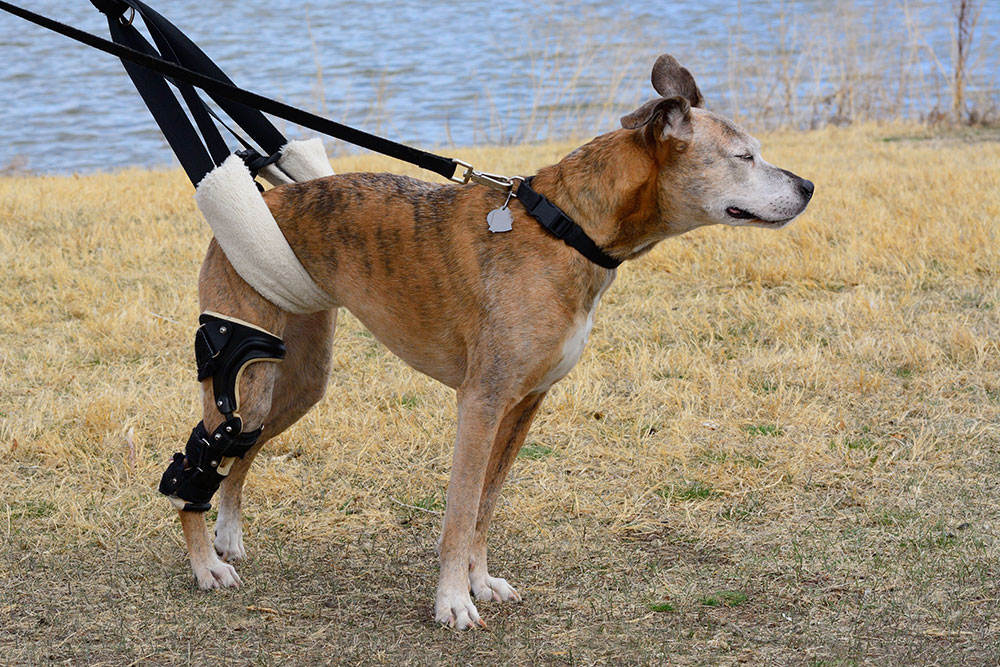
Cruciate Ligament Tears: Understanding Your Dog’s Treatment Options
You’re out on a hike when your dog makes a sudden pivot chasing a squirrel, and the next thing you know, they’re holding up a back leg. Or maybe you’ve noticed them getting stiff after play, having trouble jumping into the car, or doing that little hop-skip thing when they walk. These signs can be worrying, and if you’re wondering whether your dog might have torn their ACL, you’re not alone.
A torn cranial cruciate ligament (CCL), the canine equivalent of a human ACL tear, is one of the most common orthopedic injuries we see in dogs. The good news is that with proper diagnosis and the right treatment plan, most dogs return to comfortable, active lives. Understanding your options helps you feel confident about the decisions ahead.
As a Fear Free Certified practice in the Upper Peninsula, Animal Medical Center of Marquette is here to partner with you through diagnosis, surgery, and recovery. We offer expert orthopedic care alongside supportive therapies like laser treatment, all while keeping your dog’s emotional comfort a priority. If you’ve noticed limping, stiffness, or changes in how your dog moves, we encourage you to request an appointment so we can evaluate what’s happening and discuss your options.
What Exactly Is a Cruciate Ligament Injury?
Understanding the Anatomy and What Goes Wrong
The cranial cruciate ligament is a band of tissue inside your dog’s knee that keeps the joint stable. It prevents the shin bone (tibia) from sliding forward relative to the thigh bone (femur). When this ligament tears, either partially or completely, the knee becomes unstable. That instability causes pain, inflammation, and over time, progressive arthritis.
Every step your dog takes with an unstable knee causes the bones to shift abnormally, grinding away at cartilage and damaging the meniscus (the cushioning pad inside the joint).
What Causes These Injuries?
Some dogs tear their CCL in a single dramatic moment. Others experience gradual weakening over months or years until the ligament finally gives way. Common contributing factors include:
- Sudden movements: Pivoting, twisting, or landing awkwardly during play, especially on slippery floors or icy trails
- Breed predisposition: Labrador Retrievers, Rottweilers, Golden Retrievers, and several other breeds have higher rates of CCL tears
- Excess weight: Extra pounds put significant stress on the knee joints with every step
- Weekend-warrior exercise: Dogs who are relatively inactive during the week but have intense play sessions on weekends
- Prior knee strain: Partial tears or previous injuries that weaken the ligament over time
Because weight plays such a significant role, our team creates practical nutrition and activity plans through our comprehensive services that support healthy joints and reduce injury risk. Small changes in feeding and exercise can protect both knees over time.
What Are the Signs of a Torn ACL in Dogs?
Symptoms You Might Notice at Home
Most dogs with CCL injuries show a combination of pain and instability rather than one dramatic symptom. Watch for patterns over several days, especially after more active play sessions.
Common signs include:
- Limping on a back leg that worsens after exercise
- Difficulty rising from rest, especially after naps
- Reluctance to jump into the car, onto the couch, or up stairs
- Stiffness that improves with gentle movement but returns after rest
- Swelling around the knee joint
- A toe-touching gait where the dog barely puts weight on the affected leg
- Sitting with the injured leg kicked out to the side rather than tucked under
If your dog is showing these changes, our emergency care during open hours can help with same-day decisions, or you can request an appointment for a thorough orthopedic evaluation.
How Do Veterinarians Diagnose ACL Tears?
The Orthopedic Exam and Imaging Process
Diagnosis starts with a careful physical examination focused on your dog’s comfort. Through our Fear Free approach, we keep the process as calm and low-stress as possible while gathering the information we need.
What to expect during diagnosis:
| Step | What It Involves | What It Tells Us |
| Orthopedic palpation | Gentle manipulation to assess drawer sign and tibial thrust | Whether the knee is unstable |
| Gait observation | Watching your dog walk and trot | Which leg is affected and severity |
| X-rays | Imaging of the knee joint | Bone alignment, arthritis, and ruling out fractures |
| Advanced imaging (when needed) | MRI for complex cases | Soft tissue detail and meniscal damage |
Modern x-ray diagnostic imaging helps us evaluate bone changes and rule out other problems. For complex situations where we need to visualize soft tissues in detail, advanced imaging through MRI adds value.
Our AAHA accreditation reflects rigorous standards in imaging protocols, anesthesia safety, and staff training. You can feel confident that the evaluation guiding your dog’s treatment plan meets the highest veterinary standards.
What Are the Treatment Options for ACL Tears?
Surgical Approaches That Restore Stability
Surgery is typically recommended for CCL tears because it addresses the underlying instability rather than just managing pain. Two well-established approaches can restore function and minimize arthritis progression.
TPLO (Tibial Plateau Leveling Osteotomy)
TPLO surgery changes the geometry of the knee so the joint remains stable even without a functioning cruciate ligament. The surgeon makes a curved cut in the top of the tibia and rotates the bone to eliminate the sliding motion that causes instability. A metal plate holds everything in place while it heals.
TPLO is often recommended for larger, more active dogs because it provides excellent long-term stability and allows return to higher activity levels.
Lateral Suture Technique (Extracapsular Repair)
This approach uses a strong suture material placed outside the joint to mimic the function of the torn ligament. It stabilizes the knee while scar tissue forms to provide additional support.
Lateral suture repair can be a good option for smaller dogs, older dogs with lower activity demands, or certain clinical situations where TPLO may not be ideal.
Choosing the Right Option
| Factor | TPLO May Be Better | Lateral Suture May Be Better |
| Dog size | Medium to large dogs | Small dogs (under 30-40 lbs) |
| Activity level | Active, athletic dogs | Less active or senior dogs |
| Long-term goals | Return to high activity | Comfortable daily function |
The best choice depends on your dog’s size, age, activity level, and overall health. We discuss these factors together during consultation so you understand the reasoning behind our recommendations.
What Does Recovery and Rehabilitation Look Like?
The Importance of Structured Rehab
Surgery is just the beginning. Rehabilitation is what gets your dog back to comfortable, confident movement. Structured rehab protects the surgical repair, rebuilds muscle that’s been lost during lameness, and restores normal range of motion.
A typical rehabilitation plan includes:
- Controlled leash walks: Starting short and gradually increasing distance and duration
- Range-of-motion exercises: Gentle stretching to maintain joint flexibility
- Strengthening exercises: Progressive activities that rebuild muscle safely
- Professional modalities: Laser therapy, underwater treadmill, or other treatments that reduce pain and speed healing
We tailor protocols to your dog’s specific surgery, home environment, and your schedule. Clear, achievable instructions make it easier to stay on track.
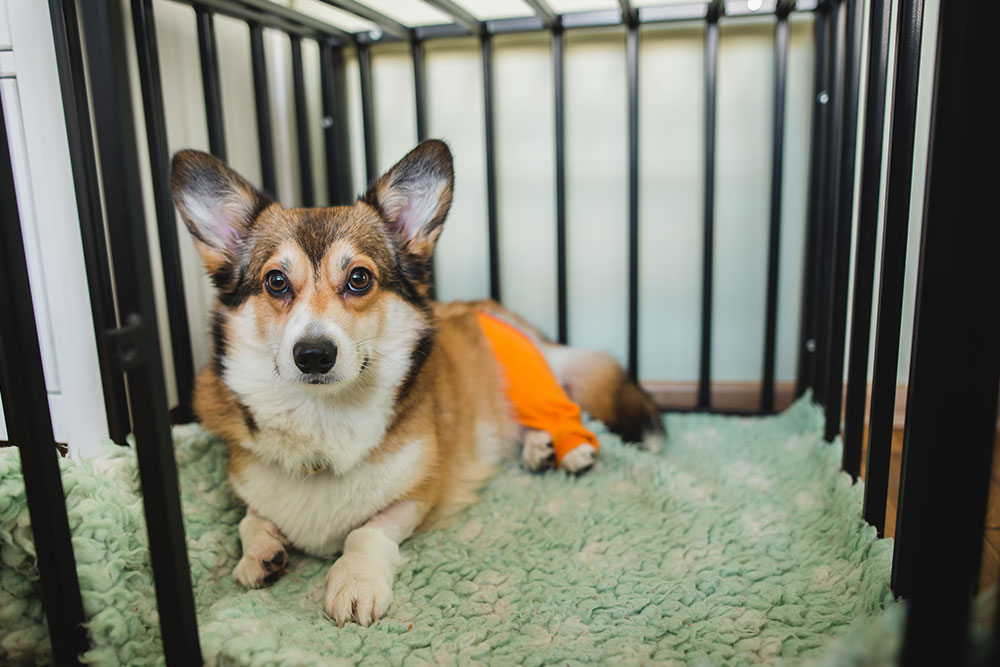
How Do You Manage Crate Rest Without Losing Your Mind?
Controlled rest is essential in the early weeks after surgery. Too much activity too soon can damage the repair before it has a chance to heal. But let’s be honest: crate rest is challenging for active dogs and their families.
Why rest matters: The surgical site needs time to heal without stress. For TPLO, the bone needs to fuse in its new position. For lateral suture, scar tissue needs to form around the stabilizing suture. Excessive movement during this period risks serious setbacks.
Making crate rest manageable:
- Establish a predictable daily routine so your dog knows what to expect
- Use food puzzles, stuffed Kongs, and lick mats to provide mental stimulation
- Practice calm, low-key interactions rather than exciting play
- Take prescribed short leash walks for bathroom breaks and gentle movement
- Rotate enrichment activities to prevent boredom
Practical strategies to survive crate rest with your dog can make these weeks easier for everyone. Our team can also coach you on enrichment ideas and safe handling during recheck appointments.
How Can You Protect Your Dog’s Joints Long-Term?
Prevention and Ongoing Care
Whether your dog is recovering from surgery or you want to protect against future injuries, daily habits make a real difference.
At-home strategies for joint health:
- Warm up before activity: A few minutes of leash walking before intense play prepares muscles and joints. Implementing warm-ups and cooldowns for dogs reduces strain.
- Maintain healthy weight: Extra pounds significantly increase stress on knee joints. Even modest weight loss helps.
- Improve footing: Add non-slip rugs on hardwood floors and use grippy boots for icy Upper Peninsula winters.
- Build consistent exercise: Regular, moderate activity is safer than weekend-warrior bursts of intense play.
The mobility matters guide provides comprehensive strategies for keeping dogs comfortable and mobile throughout their lives.
Supporting Senior Dogs
Older dogs with knee injuries often benefit from a multi-modal approach to comfort. Options we may recommend include:
- Librela: A monthly injection that targets arthritis pain and helps many seniors move more freely
- Laser therapy: Reduces inflammation and supports tissue healing
- Weight management: Lighter dogs put less stress on arthritic joints
- Home modifications: Ramps, orthopedic beds, and non-slip surfaces
If you want to discuss pain management options for an older dog, please contact us and we’ll help create a plan that fits your dog’s comfort goals.
Frequently Asked Questions
Is TPLO better than lateral suture repair?
Neither is universally “better.” TPLO often suits larger, more active dogs because it changes knee mechanics to provide excellent stability. Lateral suture repair can work well for smaller or less active dogs. The best choice depends on your individual dog’s size, lifestyle, and health status.
How long does recovery take after ACL surgery?
Most dogs begin controlled leash walks within two weeks of surgery. Structured rehabilitation continues for eight to twelve weeks. Full strength and confidence typically return over several months. Rechecks help us guide safe progression and catch any concerns early.
Can my dog tear the other ACL?
Unfortunately, yes. Studies suggest 40-60% of dogs who tear one CCL will eventually injure the other knee. Weight control, consistent exercise, improved footing, and avoiding high-risk activities help reduce this risk.
What if we can’t do surgery?
Conservative management with strict rest, weight loss, anti-inflammatory medications, and physical therapy can help some dogs, particularly very small dogs or those with health conditions that make anesthesia risky. However, the knee remains unstable, and arthritis typically progresses faster without surgical stabilization. We can discuss whether conservative care might be appropriate for your situation.
When should I call about my dog’s limping?
If limping persists for more than a day or two, worsens after rest, or is accompanied by swelling, difficulty rising, or obvious pain, it’s time for evaluation. Sudden severe lameness or inability to bear weight warrants same-day attention.
Ready to Take the Next Step?
A CCL tear is stressful for dogs and worrying for families, but with accurate diagnosis, the right surgical approach, and committed rehabilitation, most dogs return to the activities they love. Hiking, fetch, and family adventures can absolutely be part of your future together.
We’re here to make each step calmer and clearer, from initial evaluation through full recovery. If you’re seeing limping, stiffness, or changes in how your dog moves, please contact us for guidance. When you’re ready to discuss TPLO versus lateral suture repair and create a personalized plan, request an appointment with our team.
Our AAHA-accredited, Fear Free Certified practice is honored to be your partner in your dog’s care. We’re here to help, guide, and support you through recovery and toward many more trails ahead.



Leave A Comment