


A swollen lymph node does not always mean cancer in dogs and cats, but the range of causes is wide, and distinguishing among them requires an actual evaluation, not a wait-and-see approach. Lymph nodes enlarge most often because the immune system is doing its job, flagging an infection, responding to inflammation, or reacting to something happening nearby in the body. Lymphoma and other cancers can cause lymph node enlargement too, and that possibility understandably worries people most.
At Animal Medical Center of Marquette, we offer comprehensive veterinary services including in-house blood work, imaging, and canine cancer screening, so when you find a lump or your pet seems off, we can start pulling the picture together right away. If you have noticed swollen lymph nodes or a new lump on your dog or cat, do not sit with the uncertainty longer than you need to. Reach out to our team and we will help you figure out what is going on.
What to Know About Swollen Lymph Nodes in Pets
- It is not always cancer: a swollen node most often reflects the immune system responding to infection, inflammation, or irritation.
- The pattern does the early work: one node versus many, soft versus firm, tender versus painless all narrow the picture before testing.
- One quick test answers a lot: a fine-needle aspirate is minimally invasive and often gives an answer the same visit.
- Early matters: catching enlarged nodes early, especially in lymphoma-prone breeds, keeps more treatment options open.
What Are Lymph Nodes, and Where Should You Be Able to Find Them?
Your pet has lymph nodes scattered along the body’s lymphatic drainage routes, and they work invisibly most of the time. They filter lymph fluid, trap pathogens, and signal the rest of the immune system when something needs a response. You cannot usually feel a healthy node at all, so enlargement is the visible sign that a node is actively doing its job.
The nodes you can usually feel from the outside sit at predictable spots, and these lymph node locations are the same in dogs and cats.
| Lymph node | Where to feel for it | What it drains |
| Submandibular | Under the jaw, below the angle | The mouth and face |
| Prescapular | In front of each shoulder | The neck and forelimb |
| Axillary | In the armpit | The chest and front leg |
| Inguinal | In the groin crease | The belly and hind leg |
| Popliteal | Behind the knee | The lower hind leg |
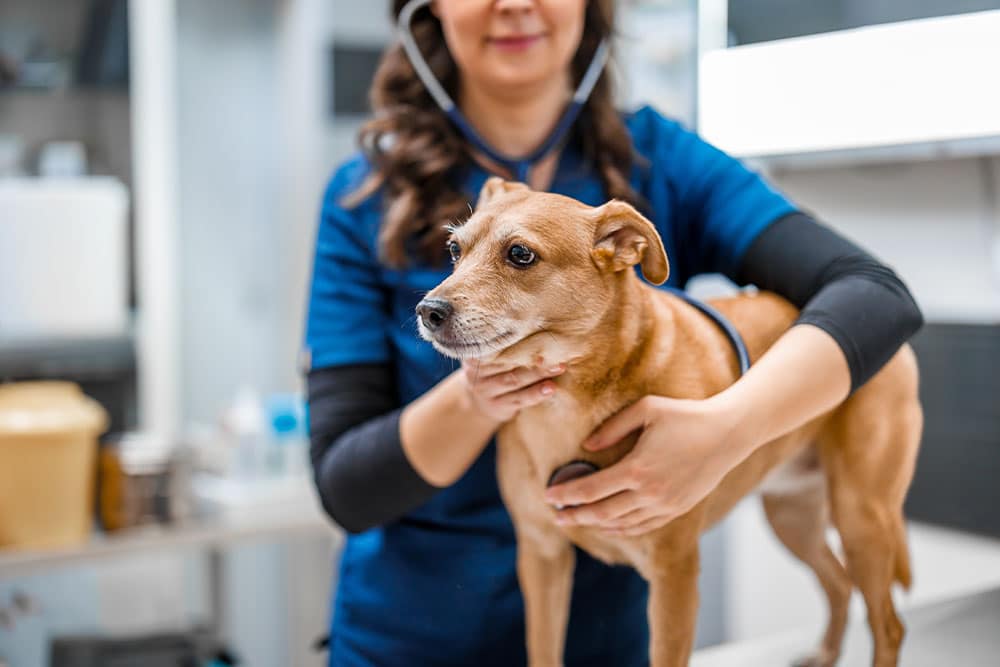
Learning where to gently feel for these is one of the most useful at-home health checks you can do. We palpate every accessible lymph node at every wellness visit, which is part of why regular veterinary services in Marquette matter. A node that has been small for years and is suddenly walnut-sized is something you only catch if someone has been checking.
What Causes Lymph Nodes to Swell in Dogs and Cats?
The honest answer is that the list is long, and the pattern of swelling does most of the diagnostic work. A single enlarged node near a wound suggests a local infection. Multiple enlarged nodes throughout the body raise different possibilities, and a firm, fixed, painless node behaves very differently under the fingers than a soft, mobile, tender one. The first job is sorting which pattern you are looking at, which is where a physical exam by your veterinarian earns its keep.
Infections and Reactive Lymph Node Swelling
Most enlarged lymph nodes that walk through our door are reactive: the immune system responding to an infection. That infection might be bacterial, viral, fungal, or parasitic, and it might be local, like an abscessed tooth draining to the submandibular nodes, or systemic, like a tick-borne illness affecting nodes throughout the body.
Common infectious causes we see in the Upper Peninsula and beyond:
- Tick-borne disease: Lyme disease is increasingly common in our region, and ehrlichia and anaplasma are worth screening for in any dog with unexplained lymph node swelling.
- Bacterial infections: leptospirosis, transmitted through standing water, rodent urine, and wildlife contact, can affect the kidneys, liver, and lymphatic system, and mycobacteriosis is a less common but recognized cause of stubborn nodal swelling in cats.
- Fungal infections: fungal disease is genuinely regional, and in the Upper Peninsula blastomycosis is the one to know, since it lives in damp soil near rivers and lakes. Histoplasmosis and aspergillosis appear less often but stay on the differential, especially in cats.
- Feline viral infections: cats with persistent unexplained enlargement should be tested for the feline leukemia virus and the feline immunodeficiency virus, both of which change how every other concern is interpreted.
- Parasitic causes: toxoplasmosis, heavy intestinal parasites, giardia, and significant external parasite loads can all activate the lymphatic system.
Cancer and Lymph Node Swelling
The reason most people search this topic is that they have already googled their pet’s lump and the word lymphoma came back, so it is fair to address that directly. Canine lymphoma is one of the most common cancers in dogs and often shows up as sudden, painless enlargement of multiple nodes in a dog who otherwise seems fine. Recent estimates suggest 1 in 15 dogs born today will develop lymphoma, rising to roughly 1 in 8 for Golden Retrievers. The real piece of good news is that the lymphoma diagnosis and subtype work that shapes every treatment decision is more accessible than it used to be, and blood-based screening tests can flag at-risk dogs before clinical signs appear.
For Golden owners in particular, the work on lymphoma in Golden Retrievers is worth following.
Feline lymphoma presents differently. It most often involves the gastrointestinal tract rather than the peripheral lymph nodes, so the first signs are usually vomiting, weight loss, or appetite changes rather than a felt-at-home lump. Other types of cancer in pets can metastasize to lymph nodes too, which is one reason a lump is never something to wait out without testing.
Immune-Mediated Conditions, Allergies, and Other Causes
A smaller but important category is non-infectious and non-cancerous, indistinguishable from common causes without testing. Immune-mediated hemolytic anemia can present with lymph node enlargement as the immune system attacks the body’s own red blood cells. Pets with chronic skin allergies and secondary infections may have reactive nodes from ongoing inflammation, and recent vaccinations can produce temporary enlargement of the nearest node. These need the same workup as the more common causes because you cannot tell them apart on the surface.
How Do We Diagnose Enlarged Lymph Nodes?
Diagnosis moves from broad to specific. The physical exam narrows the field, and a targeted test confirms or rules out the most likely cause. The goal is to land on the right answer with the fewest tests and the least discomfort. As an AAHA-accredited practice, the standards we work within are deliberate about this: enough testing to be confident, no more.
What a Physical Exam Tells Us About Lymph Node Swelling
The physical exam carries more diagnostic weight than people expect. We assess size, texture, consistency, tenderness, and whether the nodes move freely or feel fixed to the underlying tissue. A small, firm, mobile, painless node behaves very differently from one that is large, soft, and warm. A painful node usually means infection or inflammation, while one that is hard and fixed is more concerning. Whether the swelling is local, one node often near a wound or oral infection, or generalized, multiple nodes throughout the body, reshapes the entire workup.
Fine-Needle Aspiration and Biopsy for Enlarged Lymph Nodes
A fine needle aspiration, or FNA, is usually the first diagnostic step after the physical exam. A small needle collects cells from the enlarged node, which are then evaluated under a microscope. The procedure is brief, minimally invasive, and most pets do not need sedation, and cytology often answers the question in a single visit: reactive node, infection, or lymphoma.
When FNA results are inconclusive, when the suspected diagnosis needs subtype confirmation, especially with lymphoma where subtype shapes prognosis, or when the tissue architecture itself matters, a biopsy is the next step. Biopsy is performed under anesthesia and provides a larger sample for evaluation, and we perform lymph node biopsies in-house when indicated.
Blood Work, Tick Testing, and Imaging
Bloodwork, infectious-disease testing, and imaging round out the workup. A complete blood count and chemistry panel screen for systemic infection, organ disease, and the cellular changes that point toward specific diagnoses. Tick-borne disease panels are worth running in the Upper Peninsula even when ticks have not been seen. Chest radiographs and abdominal ultrasound assess internal lymph nodes that cannot be palpated, screen for organ involvement, and help with staging when lymphoma is on the table.
How Are Lymph Node Conditions Treated in Dogs and Cats?
Treatment depends entirely on diagnosis, which is why guessing and starting antibiotics, steroids, or pain medications before the workup is complete usually leads to wrong medications and delayed answers. A few rough categories:
- Allergic and dermatologic causes: resolve when the underlying skin condition is treated.
- Bacterial infections: respond to targeted antibiotics, sometimes guided by culture and sensitivity.
- Tick-borne diseases: treated with doxycycline or another appropriate antibiotic, with monitoring bloodwork to confirm resolution.
- Fungal infections: require antifungal medications, often for months, and blastomycosis can need extended courses.
- Immune-mediated disease: treated with medications that suppress the abnormal immune response, with monitoring for response and side effects.
- Lymphoma: treated with chemotherapy protocols designed for veterinary patients, where most dogs tolerate chemo well and remission rather than cure is the realistic goal. Honest conversations about what treatment looks like for your individual pet, including what we offer in-house versus what is best addressed through referral, are part of every diagnosis.
Can You Prevent Lymph Node Problems in Your Pet?
Some causes of lymph node swelling can be prevented or reduced; others cannot. The honest answer is that consistent preventive care does two things at once: it lowers the risk of the preventable causes like infections, parasites, and dental disease, and it catches everything else earlier.
Year-round flea, tick, and parasite prevention dramatically reduces the risk of tick-borne disease and parasite-related lymph node activation. We carry flea and tick prevention for dogs and flea and tick prevention for cats through our online pharmacy and can help you pick what fits your pet’s lifestyle. Keeping vaccinations current reduces the risk of viral diseases that present with nodal swelling, including FeLV in cats, and maintaining dental health reduces the chronic bacterial load that activates jaw-region nodes. Routine wellness exams with full lymph node palpation are the most reliable way to catch unexplained changes early.
When Should You Bring Your Pet In for Swollen Lymph Nodes?
Most lymph node swelling falls into one of three urgency tiers, and how fast to come in usually answers itself once you know what you are looking at.
Come in the same day if:
- Multiple nodes have suddenly enlarged: especially if your pet seems unwell.
- A node is hot, painful, rapidly growing, or draining: any of these warrants prompt attention.
- Other signs accompany the swelling: lethargy, loss of appetite, or changed breathing.
- A young or unvaccinated pet has swelling plus fever: this combination needs same-day care.
Schedule a prompt evaluation within 48 hours if:
- You find a single firm enlarged node: that does not seem to be hurting your pet.
- A node has been slowly growing over weeks: even without other signs.
- Your dog is a higher-risk breed for lymphoma: such as a Golden Retriever, Boxer, Bullmastiff, or Basset Hound.
- There has been recent tick exposure: alongside any new lump or symptom.
Schedule within the week if:
- A node found during a home check is mildly enlarged but stable: with your pet otherwise well.
- A previously enlarged node has not changed: and a recheck was already planned.
When the timing is not obvious, reach our team and describe what you are seeing. We would rather field a call than have you sit on something that needed attention.
How Can You Check Your Pet’s Lymph Nodes at Home?
A monthly home check takes about two minutes and is genuinely useful. You are not measuring sizes or diagnosing; you are setting a baseline so any change stands out.
With your pet relaxed, after a walk or during evening cuddles, gently feel:
- Under the jaw: place your fingers on either side of the lower jaw, just below the angle, and roll them gently.
- In front of the shoulders: slide your fingers down the side of the neck where it meets the shoulder, since these nodes are small and easily missed.
- In the armpits: run your fingers up into the armpit, where healthy nodes usually cannot be felt.
- In the groin: where the inner thigh meets the body wall, gently feel along the crease.
- Behind the knees: pop the leg back gently and feel behind the joint, since the popliteal nodes sit relatively superficial and are often the easiest to find.
If something feels larger than last month, firmer than the others, or new, call us. The check that turns up a change is the early-warning signal that helps us most.
Frequently Asked Questions About Swollen Lymph Nodes in Dogs and Cats
Can a Tooth Infection Cause Swollen Lymph Nodes?
It is one of the more common reasons for swelling under the jaw. The submandibular nodes drain the mouth, and a chronic dental infection or abscessed tooth can keep them activated. Treating the dental disease usually resolves the nodal swelling.
Should I Be Worried if Only One Lymph Node Is Swollen?
A single enlarged node is generally less worrisome than several, because the usual cause is a local infection draining to that node. That said, a single hard, fixed, painless node also needs investigation, because some cancers including early lymphoma can start that way. A short visit with a fingertip exam usually sorts it quickly.
Can My Dog or Cat Have a Normal Life With Lymphoma?
Many dogs with lymphoma go into remission with chemotherapy and have months to more than a year of normal-quality life, depending on subtype, treatment chosen, and individual response. Cats with lymphoma have a wider range of outcomes. We have the conversation about what is realistic honestly, based on your pet’s diagnosis and priorities.
From Discovery to a Plan
The hardest part of finding a lump is the gap between discovery and an answer. Once a systematic workup begins, that gap closes. Most enlarged lymph nodes turn out to be reactive and resolve with treatment of the underlying cause, and even when the answer is harder, knowing what you are dealing with is the start of having options.
If you have noticed a new lump on your dog or cat, request an appointment or give us a call and we will work you in to get the workup started.



Leave A Comment